
Why This Matters
The quality of drinking water can change dramatically from the time it leaves the treatment plant to the time it reaches your tap. There are a number of reasons for this. While the water that leaves your drinking water treatment plant is clean, it still holds some microbes (usually harmless ones) and trace concentrations of metals (like iron and manganese). The microbes in the water often will attach to the pipe wall and form biofilms. Biofilms are living cells that are integrated into a matrix of sticky, cement-like substance made up of proteins, polysaccharides, humic acid and other macromolecules. Unfortunately, biofilms are responsible for all sorts of problems in drinking water systems. They can remove or “consume” disinfectants like free chlorine or chloramines that keep the water safe to drink, they can harbour pathogens, and they can help the organisms living in the biofilm to develop resistance to certain metals and antibiotics---what is termed antimicrobial resistance. Metals with a positive charge (cations) in the water like and iron and manganese can also bind to the biofilm by electrostatic interactions with the functional groups of the macromolecules (proteins, polysaccharides) of the biofilm. All of this means that biofilms can act as “reservoirs” for metals, resistant organisms, and other contaminants that can be harmful to humans. The problem becomes even more serious when there is a hydraulic event in the system that changes the flow or pressure in the system and produces high shear forces at the wall that can detach these biofilms and release these contaminants into the water and to your tap.
Professional Associations
I am a co-director of the Drinking Water Quality Group at Queen’s University, a group focused on solving drinking water research problems. I am also a member of the Beaty Water Research Centre and the Contaminants of Emerging Concern – Research Excellence Network (CEC-REN) at Queen’s. In these networks, my research focuses on finding solutions to deal with emerging contaminants and antimicrobial resistance in drinking water.
Professional Membership
Education
|
2006 |
Doctor of Philosophy (PhD) |
University of Toronto |
|
2001 |
Master of Applied Science (MASc) |
University of Toronto |
|
1997 |
Bachelor of Applied Science (BASc) |
University of Toronto |
The problem with distribution systems
Have you ever opened your faucet and seen water flow out of your tap that has a bad taste or smell or appearance? Have you ever wondered why the water flowing from your tap is sometimes of such poor quality? Drinking water that leaves the water treatment plant often has trace concentrations of dissolved and particulate metals and microorganisms (the good kind that do not make you sick). The microbes will often attach to the pipe wall and secrete a sticky substance called extra-cellular polymeric substance (EPS)–a sort of cement-like substance that glues them to the wall and protects them against disinfectants and the physical forces of the flowing fluid. Biofilms in drinking water pipes are usually seen as undesirable since they “consume” disinfectants like chlorine and chloramines and can shelter pathogens and cause aesthetic (bad odour and taste) and other water quality problems. Biofilms also tend to have a very high density of microbes of different kinds (bacteria, archaea, fungi and sometimes protozoa) that allow them to easily swap their genetic material between each other. If some of those microorganisms have developed a resistance to one or many antibiotics, they can easily pass on those resistant genes to their neighbours in the biofilms so that they too develop resistance. In this way, drinking water biofilms are known to promote and disseminate antibiotic resistance and resistance genes.
Metals in drinking water can settle to the bottom of the pipe (if they are heavy enough). If they exist as colloids (small enough to remain in suspension and not settle), positively charged metals can also “stick” to the pipe wall itself or the biofilm (usually negatively charged by virtue of the functional groups in the proteins and polysaccharides of the “cement-like” EPS) by means of electrostatic interactions. In this sense, biofilms can act as reservoirs for metals. During a normal day of service, this is not a problem. However, during unusual events in the system (pump trip, sudden hydrant opening or closure), the fluid in the pipe is accelerated and produces high shear forces at the wall that can mobilize biofilm and metals and transport them to your tap. The outcomes can range from simple inconvenience (red water from tap, staining of laundry) or the ingestion of pathogens or metals that are deleterious to human health.
Research in the Filion Group
My research group spends most of its time trying to understand the complex combination of hydrodynamic, water quality, and microbiological factors that cause metals (dissolved and particulate) to accumulate, biofilms to grow, and antimicrobial resistance to develop in drinking water distribution systems (DWDS). Some of the research questions that occupy our time include: What are the mechanisms responsible for metals to accumulate on the wall of drinking water pipes? Once these metals are adhered to the pipe wall, what can cause them to be resuspended into the flow and be transported to your tap? What conditions, whether hydrodynamic, water quality, or microbiological, have to exist in drinking water pipe to support the growth of biofilms? What are the mechanisms that cause trace levels of antibiotics in the drinking water to promote the expression and dissemination of resistant genes in the microorganism that inhabit a biofilm? And how can we develop physical and physico-chemical approaches (from flushing to the suspension of nanobubbles in drinking water) to prevent biofouling of the pipe (prevent biofilms from forming) and remediate the pipe of metals and antibiotic resistance genes and other contaminants?
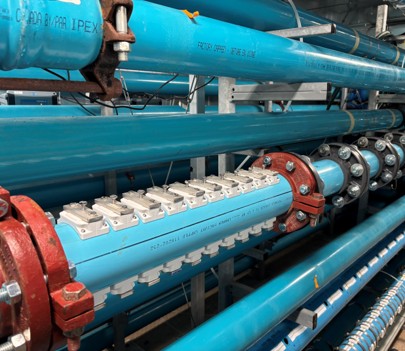 |
Metals Accumulate in Drinking Water Systems This a hard topic to tackle given that so many factors can influence metal accumulation in drinking water distribution systems. To make things more manageable, we perform controlled experiments in our pilot-scale Drinking Water Distribution Laboratory (DWDL) that mimics the physical, chemical, and microbiological conditions of real distribution systems. The DWDL allows us to understand how metals “stick” to pipes and what factors – from pipe material to hydrodynamic and water quality – exert the biggest influence on metal accumulation. The water industry can use this knowledge to make decisions about how they operate their systems to manage water quality and safety. |
 |
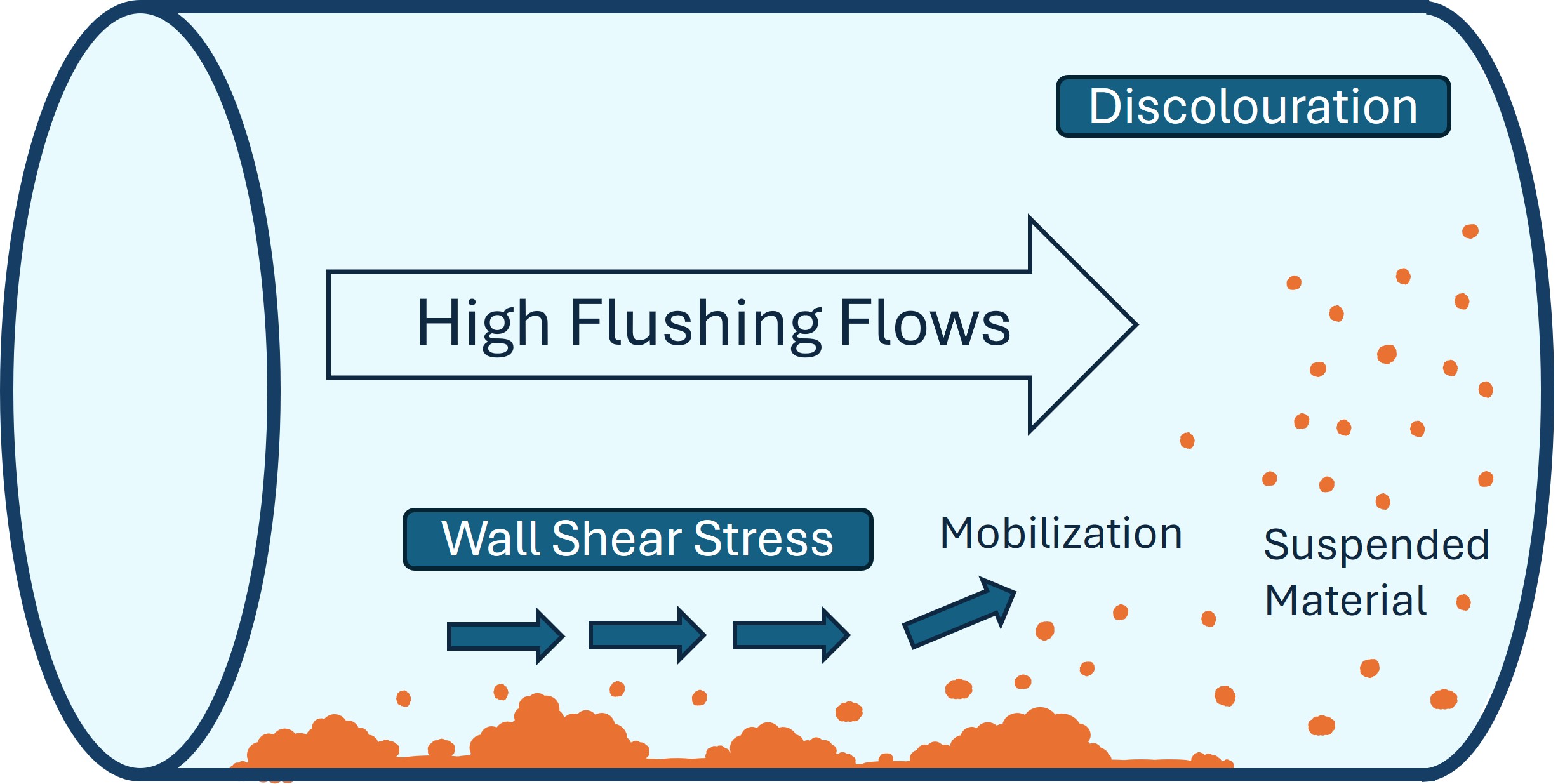
Metals Sometimes Cause Your Drinking Water to Become Brown or Red In North America this is called the “red water” problem and it tends to generate a lot of water customer complaints for water utilities. In Europe they call it drinking water discolouration. Hydraulic “events”, like when a hydrant or valve is opened quickly, can quickly increase the shear force at the wall and cause biofilm and metals on the wall to be suspended into the water. Our research group is interested in understanding what metals, pipe materials, water quality conditions, and hydraulic events can cause these “red water” problems. Canadian water utilities can use this information to manage their systems to minimize the occurrence of “red water” and the costly customer complaints they generate. |
 |
Hydrodynamic Conditions and Water Quality Influence Biofilm Growth
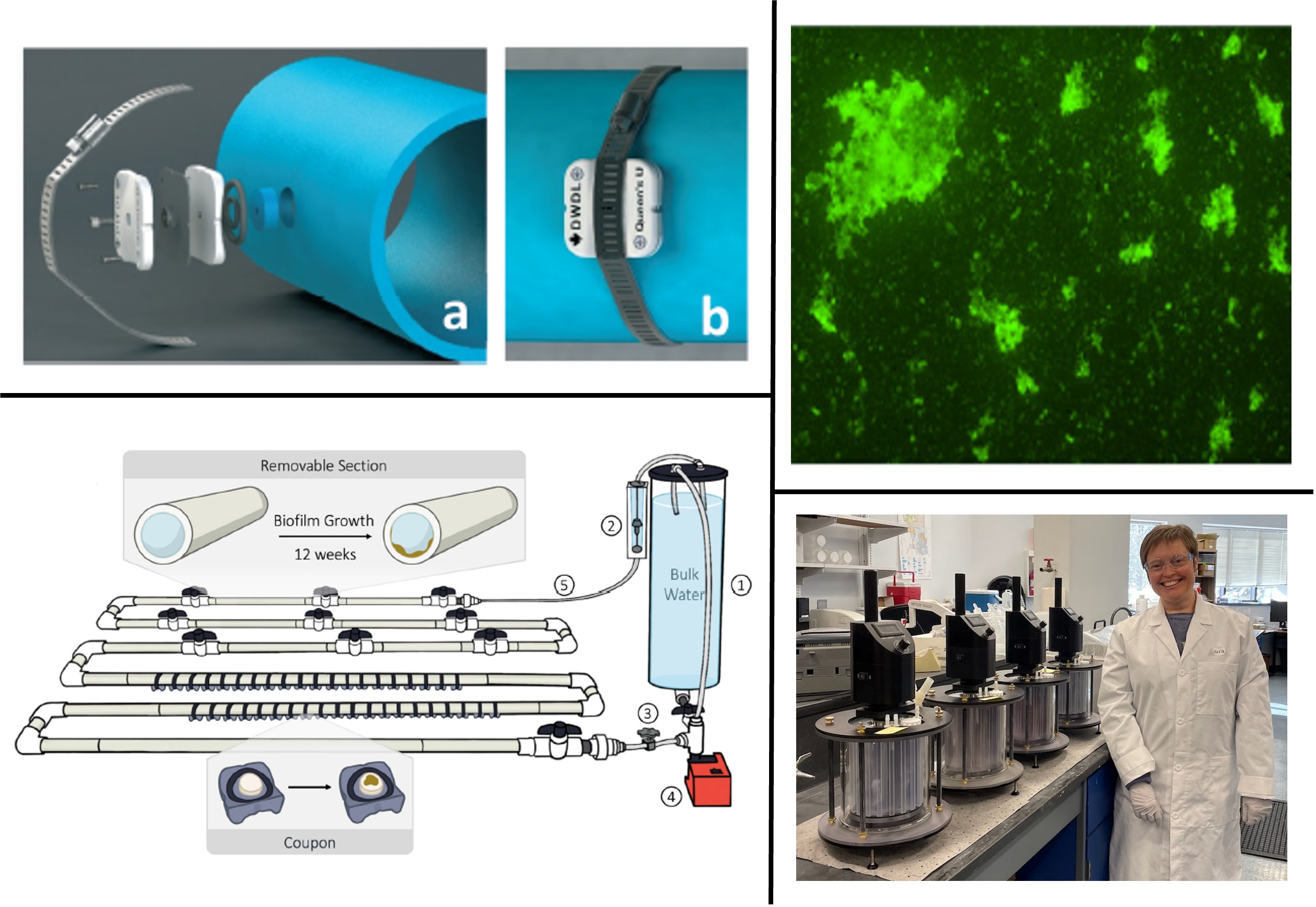
Our research group is busy studying how biofilms in pipes can be shaped by their aquatic environment. Using pilot-scale and bench-scale reactors, we are interested in understanding how hydrodynamic patterns (flow variation, intermittency, occurrence of small transients, levels of turbulence) can influence the properties of biofilms like their strength, the number of viable cells, and the diversity of their microbial communities. We are also keen on understanding how water quality conditions (nutrient levels, levels of organic carbon, disinfectant levels) shape the development of biofilms. The goal is to work with Canadian municipalities to better understand how system operations and the quality of the water leaving the water treatment plant will affect the biostability in a distribution system. |
 |
Biofilms Can Act As Reservoirs for Antimicrobial Resistance (AMR) (Sadly)
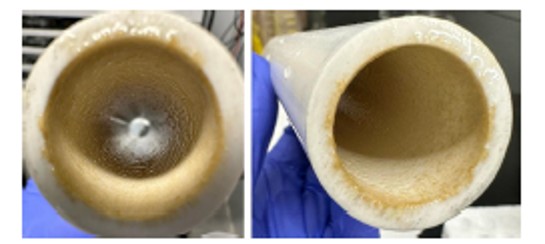
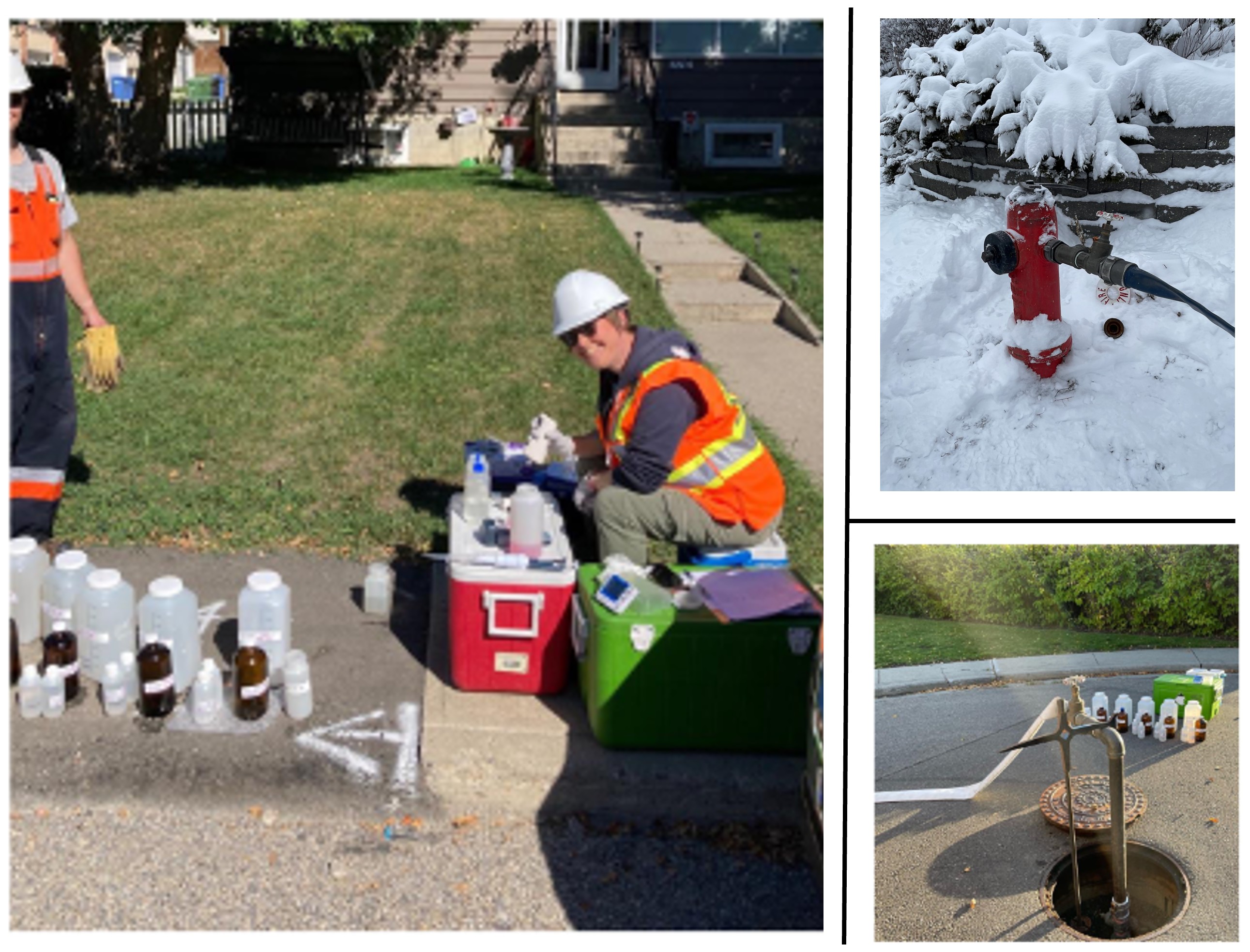
The World Health Organization (WHO) has identified antimicrobial resistance (AMR) as one of the most pressing global health challenges of the 21st century. Our research group adopts the One Health approach that recognizes the interconnectedness of human, animal, and environmental health to study how residual concentrations of antibiotics in water supply systems can promote AMR in drinking water biofilms. Our approach is to perform controlled laboratory studies with bench-scale reactors to understand how biofilms can enable horizontal and vertical gene transfer between resistant organisms and upregulate and disseminate resistant genes. Water utilities are beginning to recognize the risk that resistant organisms and genes in drinking water pose to water customers. |
 |
Remediation Interventions Can Control Biofilms and Metals in Drinking Water Pipes
Biofilms and metals in distribution systems represent a water quality and system maintenance challenge for water utilities. Our research group uses field investigations and pilot-scale laboratory facilities to develop strategies to control and remediate biofilms and metals in systems. Our research is focused on deploying physical approaches (unidirectional flushing, swabbing, pigging) and innovative, non-chemical approaches (nanobubbles, engineering antifouling rough surfaces) to prevent material accumulation in feeder and dead-end water mains. Water industries are adopting these innovative strategies to manage the water quality and improve customer satisfaction. |
You can find Dr. Filion’s full list of publications here:
Recent Publications
Our research group is looking for hard-working and talented researchers for fully-funded Masters and PhD programs in the areas of
If you have an innovative and novel topic in this general area, we certainly would like to hear from you!
If you are interested in applying to a graduate program with us, please send us your CV, your most recent academic transcript complete with a cover letter that briefly describes what position/topic you are interested in and how your experience is relevant to the position. Please send this material to me, Dr. Yves Filion (yves.filion@queensu.ca) with a subject line that includes your name and the research opportunity.